

Bahra University Law Students Gain Practical Legal Exposure During Educational Visit to National Lok Adalat at Kandaghat Civil Court.
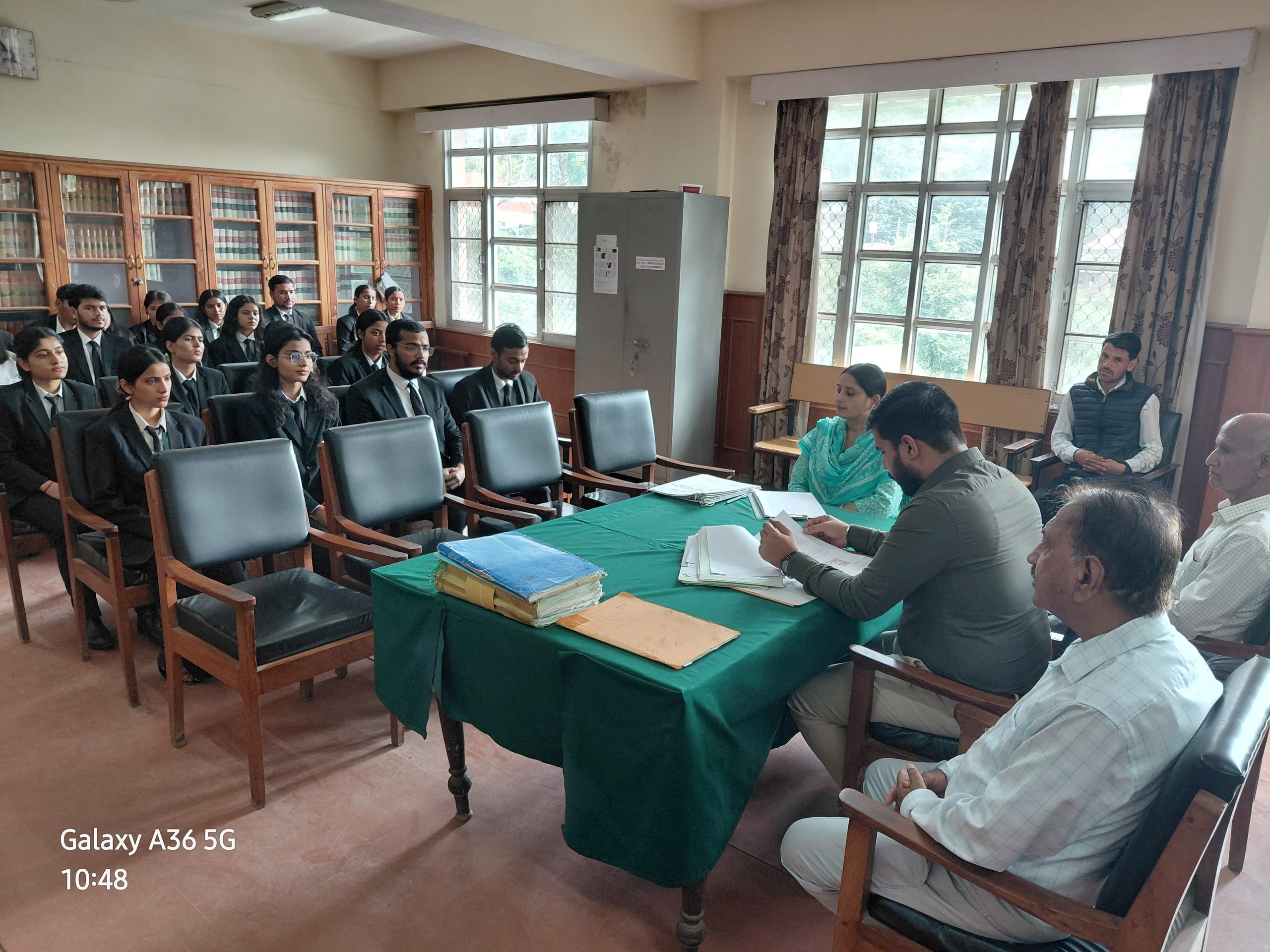
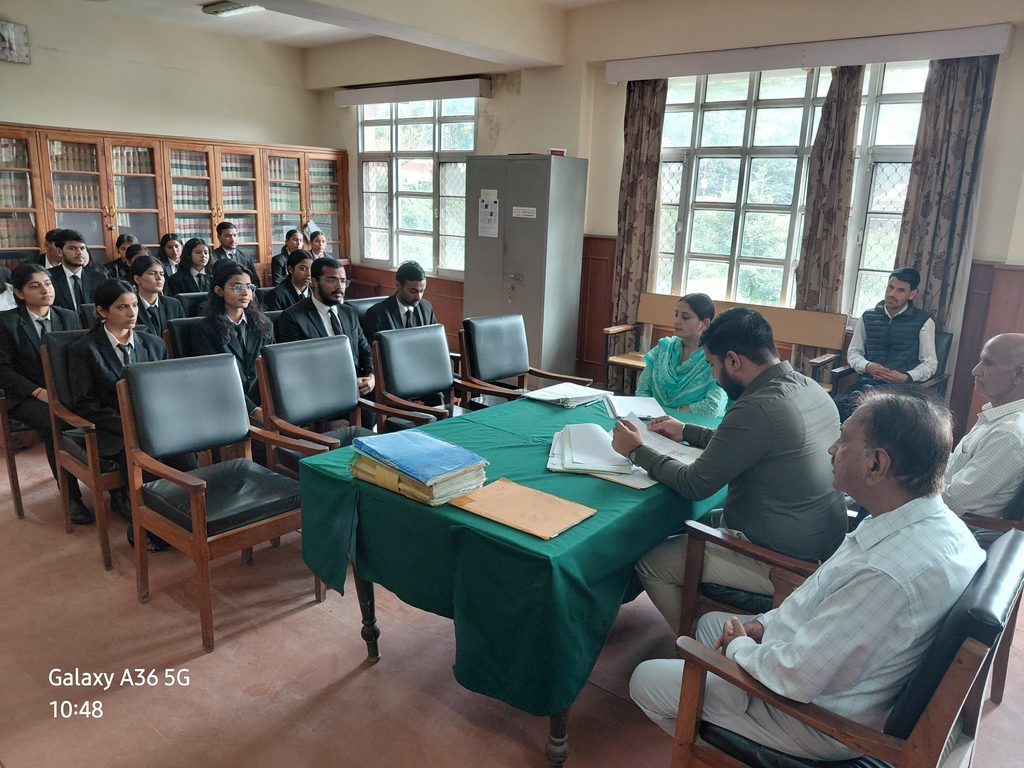
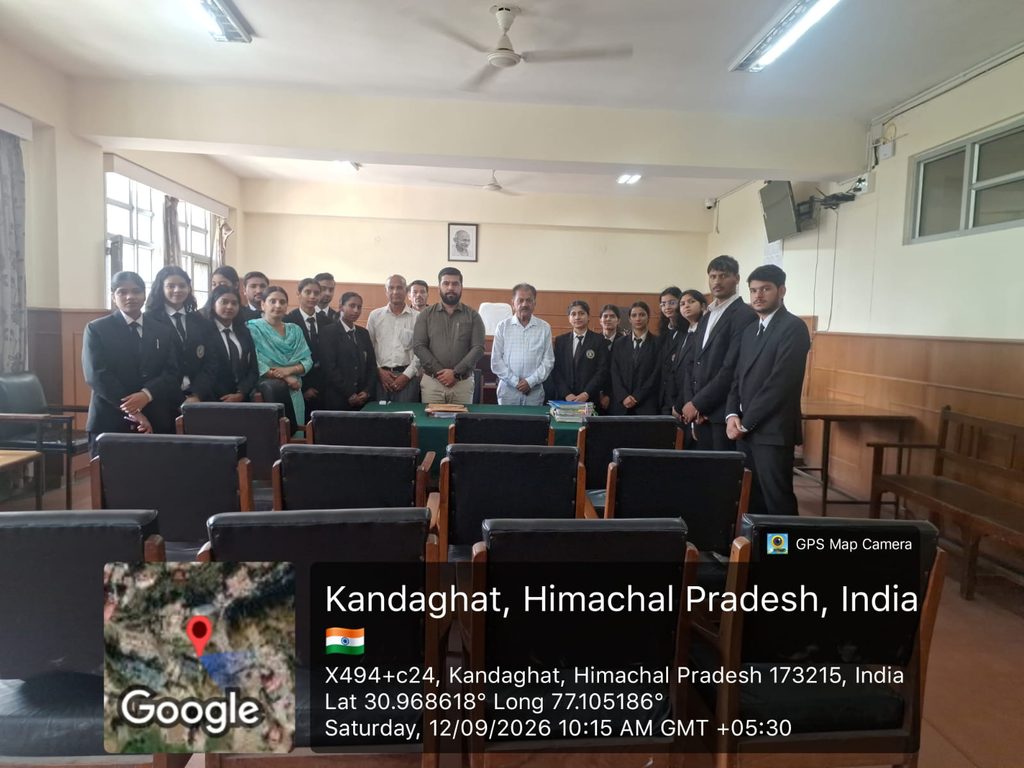
September 12, 2026: In a significant initiative aimed at strengthening practical legal education and experiential learning, a delegation of 25 law students from the School of Law, Bahra University visited the National Lok Adalat at the Civil Court Complex, Kandaghat, District Solan, on September 12, 2026.
The educational visit provided students with valuable firsthand exposure to the functioning of the Indian judicial system and the practical application of Alternative Dispute Resolution (ADR) mechanisms. The students observed real-time proceedings involving civil and property disputes, gaining a deeper understanding of how disputes can be resolved through mutual settlement and compromise outside the conventional process of prolonged litigation.
Students Observe Lok Adalat Proceedings and ADR Mechanisms
During the visit, the students closely observed the proceedings of the National Lok Adalat, an important mechanism for facilitating amicable settlement of disputes. The experience enabled them to connect concepts studied in the classroom with actual legal proceedings and understand the practical significance of negotiation, compromise, conciliation, and mutual settlement in dispute resolution.
The proceedings also offered students an opportunity to understand how Lok Adalats contribute towards accessible, cost-effective and expeditious justice while helping disputing parties arrive at mutually acceptable solutions.
Interaction with Civil Judge Provides Valuable Legal Insights
As part of the educational interaction, the students had the privilege of interacting with Dr. Yudh Veer Singh, Civil Judge-cum-Judicial Magistrate First Class, who shared valuable practical insights into various aspects of civil and property-related matters.
Dr. Singh explained important legal concepts associated with land and property disputes, including Jamabandi and land revenue records, compromise deeds and verification of revenue records. He explained the importance of accurately examining revenue documents and following appropriate legal procedures while dealing with property-related matters.
He also highlighted the significance of mutual settlement and compromise in dispute resolution, particularly in matters where an amicable solution can help parties avoid lengthy litigation. The interaction enabled students to appreciate the broader social importance of dispute resolution, including the preservation of relationships and promotion of social harmony.
Students Learn About India’s Modern e-Courts System
A key component of the visit was the students’ introduction to the e-Courts system, which has transformed several aspects of judicial administration in India. Students gained an understanding of online case filing, digital case records, electronic access to case information and online case-status management.
The exposure helped students understand how technology is increasingly being integrated into the Indian justice delivery system and how digital platforms are contributing to greater efficiency, accessibility and transparency in court-related processes.
Bridging the Gap Between Classroom Learning and Courtroom Practice
The interaction with judicial officers, advocates and court staff provided the students with a comprehensive perspective on court procedures, case management and the day-to-day functioning of the Indian judicial system.
Such educational visits play an important role in developing the professional competencies of law students. By witnessing actual proceedings and interacting with members of the legal and judicial fraternity, students are able to understand the practical dimensions of legal principles that are otherwise studied primarily through textbooks and classroom discussions.
The visit therefore served as an effective bridge between academic legal education and practical courtroom exposure, enabling students to develop a more comprehensive understanding of dispute resolution, judicial procedures and professional legal practice.
Bahra University’s Commitment to Experiential Legal Education
The educational visit reflects the School of Law, Bahra University’s commitment to experiential learning, practical legal education and professional development of law students. Regular exposure to courts, judicial institutions, legal professionals and contemporary legal technologies forms an important part of preparing students for careers in litigation, judiciary, corporate law, legal consultancy and other areas of the legal profession.
The delegation was accompanied by Mr. Balwant Singh, Assistant Professor, School of Law, Bahra University, who facilitated the students’ educational exposure during the visit.
The visit to the National Lok Adalat at Civil Court Kandaghat proved to be an informative and enriching academic experience, giving students a practical understanding of Alternative Dispute Resolution, property law procedures, court functioning, e-Courts technology and the role of judicial institutions in delivering accessible justice.
Through such initiatives, Bahra University continues to strengthen its focus on industry exposure, experiential learning and practice-oriented legal education, empowering its students with the knowledge, skills and professional perspective required to contribute effectively to the legal system.